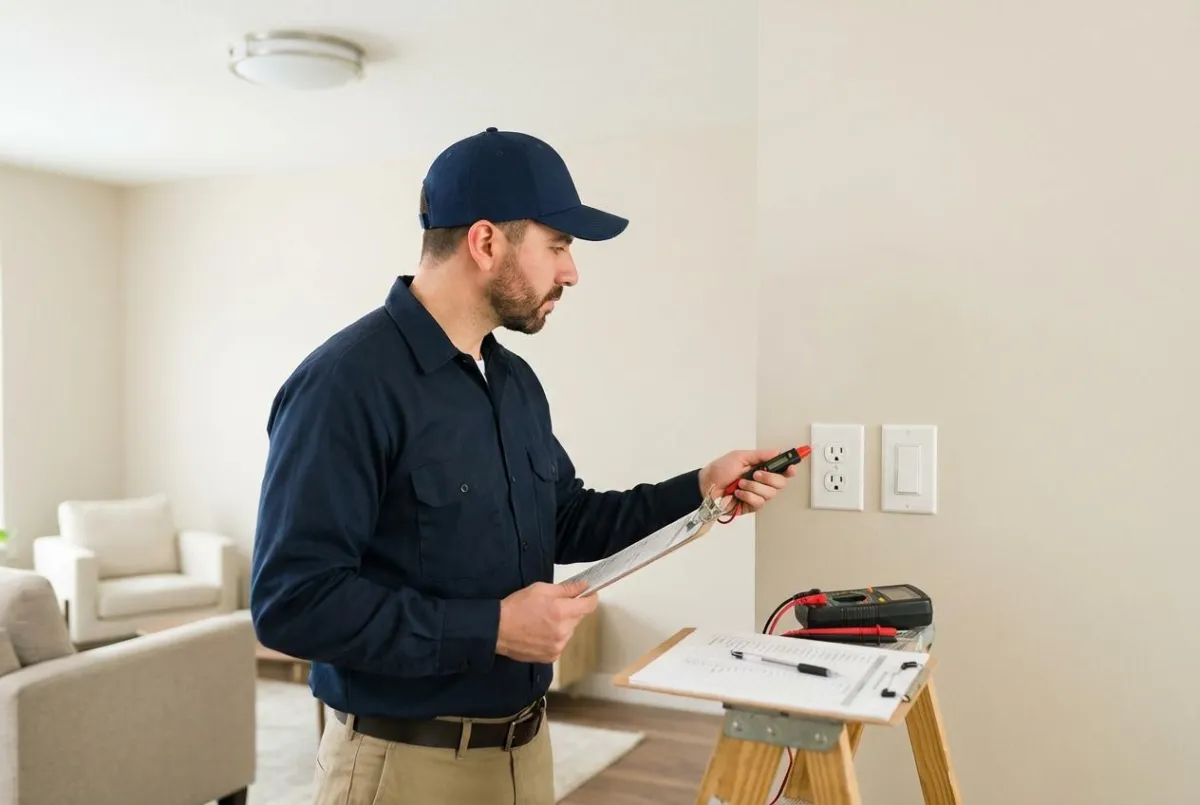
06 - What to Know About Receptacles, Switches, and Lighting
The Essential Electrical Guide for Home Buyers: What Every Smart Buyer Should Know About Receptacles, Switches, and Lighting
As a home inspector with extensive expertise in residential electrical systems, I've examined thousands of homes and identified countless electrical issues that buyers overlook during their property search. Understanding the electrical components of a potential home isn't just about ensuring convenience—it's about safety, functionality, and protecting your investment. This comprehensive guide will equip you with the knowledge to evaluate receptacles, switches, lighting, and appliances like a seasoned professional.
Understanding Receptacles: The Foundation of Your Home's Electrical Access
What Modern Receptacles Should Look Like
When touring a home, pay close attention to the electrical receptacles (outlets). Modern homes should feature three-slot grounded polarized receptacles for standard 120-volt applications. These receptacles have a larger neutral slot on the left, a smaller energized slot on the right, and a grounding slot at the bottom. This polarized design isn't merely aesthetic—it's a critical safety feature that prevents metal components in devices like lamps from becoming energized and creating shock hazards.
For 240-volt applications, such as electric dryers and ranges, you should see four-slot grounded receptacles. If you encounter older two-slot receptacles throughout the home, this isn't necessarily a deal-breaker, but it indicates the electrical system may need modernization to safely accommodate contemporary appliances and electronics.
The Critical Importance of Proper Grounding
One of the most significant electrical defects I encounter is ungrounded three-slot receptacles. Some homes have three-slot receptacles that appear modern but lack proper equipment grounding—a dangerous situation that creates shock hazards. Sometimes unscrupulous individuals create what's called a "bootleg ground" by connecting the grounding terminal to the neutral terminal. This makes the receptacle test as grounded with basic testers, but it's not truly grounded and places dangerous electrical current into the grounding system.
When evaluating a home with older wiring that lacks equipment grounding conductors, there are two acceptable solutions: installing GFCI (Ground Fault Circuit Interrupter) receptacles labeled "NO EQUIPMENT GROUND," or running new equipment grounding conductors to the nearest available ground source. Any other configuration represents a safety hazard that should be addressed.
Receptacle Placement: Convenience Meets Code
Modern electrical standards ensure receptacles are conveniently located throughout your home. Here's what to look for:
Living Spaces: In bedrooms, living rooms, and other habitable areas, receptacles should be spaced so that no point along any wall is more than six feet from an outlet. This typically means you'll find receptacles approximately every twelve feet. Wall space includes any section more than two feet wide, so even shorter wall segments should have access to power.
Kitchen Countertops: Kitchen receptacle requirements are particularly stringent for good reason—this is where you'll use multiple small appliances. Above kitchen countertops, GFCI-protected receptacles should be positioned so no point is more than two feet from an outlet, resulting in spacing approximately every four feet. These receptacles should be mounted no more than twenty inches above the countertop and should never be installed face-up on the countertop surface where spills could create hazards.
Kitchen Islands and Peninsulas: If the home features a kitchen island measuring more than two feet long and one foot wide, it should have at least one GFCI-protected receptacle. The same applies to peninsulas measuring more than two feet from the connecting wall. These receptacles may be mounted on the cabinet side if they're within twelve inches below the countertop and the countertop doesn't overhang more than six inches.
Bathrooms: Each bathroom sink should have at least one GFCI-protected receptacle within three feet of the sink's outside edge. These receptacles may be installed on the vanity cabinet if positioned within twelve inches below the countertop. Never should you see receptacles installed in or directly above bathtubs and showers—this represents a serious safety violation.
Outdoor Areas: The front and rear of the house should each have at least one GFCI-protected receptacle within seventy-eight inches of grade (ground level). If the home has a deck, balcony, or porch accessible from inside, an additional GFCI-protected receptacle should be present within seventy-eight inches of that surface as well.
Garages and Basements: Attached garages should have at least one GFCI-protected receptacle in each vehicle bay, plus any receptacles needed for appliances. Unfinished basements require at least one GFCI-protected receptacle beyond those serving appliances. These requirements reflect the higher moisture exposure and shock risk in these areas.
Laundry and Utility Areas: The laundry area needs at least one GFCI-protected receptacle. Additionally, heating and cooling equipment should have a receptacle within twenty-five feet and on the same level as the equipment—this ensures service technicians can safely maintain your systems.
Red Flags: Receptacle Defects to Watch For
During your home tours, be alert for these common receptacle problems:
Loose receptacles that move when you insert or remove a plug indicate poor installation and potential fire hazards from arcing connections
Damaged, scorched, or painted receptacles suggest electrical problems or improper maintenance
Missing or damaged cover plates expose dangerous electrical components
Gaps between receptacles and cover plates indicate improper installation
Inadequate weather protection on exterior receptacles—outdoor receptacles need weatherproof covers, with "bubble covers" required in wet locations where the receptacle remains protected even with a plug inserted
Plugs that fall out of receptacles indicate worn contacts that should be replaced
Physical Condition and Installation Quality
Pay attention to the physical condition of receptacles. They should be mounted flush with or slightly protruding from their cover plates, and they absolutely should not move when you insert or remove plugs. Loose receptacles are among the most common defects I document, particularly receptacles mounted in bathroom mirror assemblies. The constant vibration from opening and closing mirrors causes mounting screws to loosen over time.
When loose receptacles aren't corrected, the conductors can work free, leading to arcing, overheating, and potential fire. This isn't a minor cosmetic issue—it's a legitimate safety concern that requires repair.
Switches: Control and Safety Throughout Your Home
Modern Switch Types and Functions
While early homes featured various switch types including rotary switches, push-button switches, and pull chains, modern homes primarily use snap switches (with small handles) or rocker switches. If you encounter older switch types, they're not necessarily problematic, but they may indicate other aspects of the electrical system are also dated.
Be aware that mercury switches, popular in the 1960s and 1970s, are now considered hazardous waste. These switches are identifiable by their completely silent operation. If present, they should be replaced by qualified electricians who can properly dispose of the mercury-containing components.
Dimmer Switches: Not One-Size-Fits-All
Many homes feature dimmer switches for ambiance and energy savings, but it's crucial to understand that different dimmers are required for different applications. LED lamps require LED-compatible dimmers, fluorescent lights need fluorescent-rated dimmers, and ceiling fans require fan-specific controls. Using the wrong dimmer type can cause flickering, buzzing, shortened bulb life, or equipment damage.
When evaluating a home with numerous LED fixtures or ceiling fans, test the dimmers to ensure they operate smoothly without flickering or making unusual sounds. These issues often indicate incompatible dimmer types.
Three-Way and Four-Way Switch Systems
Homes with lights controlled from multiple locations—such as stairway lights with switches at both the top and bottom—use three-way switches. Lights controlled from three or more locations require three-way switches at each end and four-way switches in the middle. The wiring for these configurations is complex, and even professional electricians sometimes make mistakes during installation.
Critical testing tip:When evaluating a home, test all multi-location switches from every switch position. I frequently discover that lights function when switches are in certain positions but fail when switches are in other positions. This indicates wiring errors that will require correction.
Proper Switch Installation Standards
Switches should be installed with the "ON" position at the top (except for three-way and four-way switches, and switches operated horizontally or by rotation). Industry convention places wall switches approximately forty-eight inches above the floor, though this isn't strictly required. The maximum height is seventy-nine inches when the switch is in the up position.
Switches must be firmly mounted—they should not move when operated. Loose switches create the same arcing and fire hazards as loose receptacles. Additionally, switches in wet or damp locations, such as covered exterior areas, should have weatherproof covers.
Switch Defects That Should Concern You
Watch for these switch-related issues during home tours:
Switches that move when operated indicate loose mounting and potential hazards
Damaged, scorched, or aged switches suggest electrical problems—particularly if you hear arcing sounds when operating them
Missing or damaged cover plates expose electrical components
Switches that feel warm may be undersized for their load
Switches installed behind doors or in other inconvenient locations that create operational difficulties
Switches installed upside down (though this may intentionally indicate a switched receptacle)
Intermittent operation suggests failing switch components or wiring problems
Lighting: Safety, Functionality, and Ambiance
Required Lighting Throughout the Home
Electrical codes mandate specific lighting installations to ensure safety and livability. Understanding these requirements helps you evaluate whether a home meets minimum standards:
Habitable Rooms and Bathrooms: Every bedroom, living room, and bathroom should have a wall switch-controlled light. In kitchens and bathrooms, this must be a permanent ceiling or wall fixture. In other rooms, the requirement can be satisfied by a switched receptacle that controls a lamp.
Hallways and Stairways: Every hallway and interior stairway requires a wall switch-controlled permanent light fixture. Interior stairway lighting is particularly critical for safety. The lights must be capable of illuminating all treads and landings, including the top and bottom landings. When viewing homes, pay attention to how stairways will be illuminated at night—shadows and inadequate lighting create serious fall hazards.
Stairways with six or more risers should have three-way switches near both the top and bottom landings, allowing you to control the lights from either location. This prevents the dangerous situation of descending or ascending stairs in darkness.
Exterior Doors and Outdoor Areas: Each exterior door should have a switch-controlled light, with the switch located inside the home. Exterior stairways require lighting, typically near the top landing (or at the bottom for basement stairs).
Garages: Both attached and detached garages (if provided with electricity) need wall switch-controlled permanent lighting. The vehicle door isn't considered an exterior door for the purpose of exterior door lighting requirements.
Storage and Utility Spaces: Basements, attics, and crawl spaces used for storage or containing equipment requiring service need at least one light. The switch should be located near the entrance, though pull-chain lights are acceptable if located near the entrance.
Light Fixture Types and Considerations
Modern homes feature diverse light fixture types, including:
Flush-mounted ceiling fixtures installed directly against the ceiling
Hanging fixtures like chandeliers and pendants suspended by chains, rods, or cords
Wall-mounted sconces providing accent or task lighting
Recessed (can) lights installed into ceiling cavities
Track lighting mounted to metal strips for adjustable illumination
Under-cabinet fixtures providing task lighting for kitchen countertops
Each fixture type has specific installation requirements. Heavy fixtures weighing more than six pounds require boxes rated for heavier loads, while fixtures exceeding fifty pounds need independent support or heavy-duty boxes. Though support systems are typically concealed, extremely heavy chandeliers warrant professional evaluation to confirm adequate support.
Critical Lighting Safety Requirements
Near Tubs and Showers: Hanging fixtures, track lights, and ceiling fans must have no parts—including non-conductive components like glass and fan blades—within a zone extending three feet horizontally and eight feet vertically from the tub rim or shower threshold. Fixtures within the tub or shower perimeter must be rated for damp areas, or wet areas if subject to shower spray. This prevents electrical shock hazards in the home's most dangerous electrical environment.
Clothes Closets: Clothes closet lighting has specific restrictions due to fire hazards. Light fixtures with exposed incandescent bulbs are never permitted in clothes closets. Surface-mounted incandescent and LED fixtures must be at least twelve inches from storage areas, while surface-mounted fluorescent fixtures and recessed fixtures require only six inches of clearance. These restrictions prevent ignition of clothing and other combustible materials.
Recessed Lighting Considerations
Recessed lights deserve special attention, as they penetrate the ceiling envelope and can affect energy efficiency and moisture control. Some recessed lights are rated for insulation contact (IC-rated), meaning insulation can safely cover them. Non-IC-rated fixtures require at least three inches of clearance from insulation to prevent overheating.
Identifying IC-rated fixtures from below is challenging because labels are typically inside the can. If you're viewing a home during the inspection process, this is an important point to have the inspector evaluate from the attic.
Modern recessed lights should have sealed cans limiting air flow between conditioned and unconditioned spaces. Older unsealed recessed lights can allow significant air leakage, contributing to energy loss, ice dam formation, and moisture problems in attics. Excess attic moisture can lead to wood damage and fungal growth. If the home has numerous recessed lights, especially older installations, energy efficiency improvements may be warranted.
Ceiling Fans: Appliances with Special Requirements
Ceiling fans aren't light fixtures—they're appliances with distinct installation requirements. The boxes supporting ceiling fans must be specifically labeled as suitable for ceiling fan installation and should be secured directly to framing or to metal bars attached to framing. The dynamic loads from rotating blades, especially if unbalanced, place greater stress on mounting systems than static light fixtures.
Unbalanced ceiling fans that wobble noticeably represent a reportable defect. This wobbling increases stress on mounting hardware and can lead to catastrophic failure. If you observe ceiling fan wobbling during your home tours, note it for further evaluation.
Some ceiling fans operate only by remote control. While testing remote operation is technically beyond a standard home inspection's scope, the inability to test a fan at all (if no remote is available) is a limitation that should be documented.
Energy Efficiency and Bulb Types
Modern homes should have at least seventy-five percent high-efficacy bulbs, including compact fluorescent lamps (CFLs), light-emitting diode bulbs (LEDs), and fluorescent tubes. These energy-efficient options dramatically reduce electricity consumption compared to traditional incandescent bulbs.
Each bulb type has characteristics worth considering:
Incandescent bulbs are being phased out due to inefficiency but may still be present in older homes
CFLs offer energy savings but contain mercury and may have warm-up periods
LEDs provide excellent efficiency and longevity (up to twenty years) with decreasing costs
Fluorescent tubes are efficient but some find the light quality harsh
Halogen bulbs are more efficient than incandescent but generate significant heat and require proper fixture heat dissipation
Lighting Defects to Identify
Be alert for these lighting-related issues:
Loose fixtures or fans that move or sag
Damaged, scorched, or aged fixtures indicating electrical or heat problems
Exposed conductors in fixture boxes from missing parts
Gaps between fixtures and mounting surfaces suggesting improper installation
Interior fixtures installed outdoors lacking appropriate weather protection
Fixtures that don't respond to nearby switches indicating wiring problems
Hanging fixtures or ceiling fans too close to tubs or showers violating safety clearances
Fixtures too close to closet storage areas creating fire hazards
Exposed bulbs in clothes closets presenting ignition risks
Recessed lights that operate intermittently, often due to overheating and thermal cutoff activation
Appliance Disconnects: Safety for Service Personnel
Fixed-in-place appliances should have a means to safely disconnect electrical power for service personnel. This applies to furnaces, boilers, air handlers, air conditioning condensers, electric baseboard heaters, sump pumps, sewage ejector pumps, and swimming pool pumps.
The circuit breaker or fuse at the panelboard always serves as an acceptable disconnecting means if the panelboard is within sight of the appliance. When the panelboard isn't visible from the appliance location, a separate disconnecting means should be installed nearby—typically a switch, fuse block, or pull tab inside an enclosure.
Appliances designed for cord-and-plug connection, such as dishwashers, food-waste disposers, trash compactors, and microwave ovens, may use the plug itself as the disconnecting means.
When touring homes, note whether major appliances have obvious disconnecting means nearby. During a professional inspection, these disconnect enclosures should be opened to verify proper installation and identify any wiring defects.
Special Electrical System: Low-Voltage Switching
Some homes built in the 1960s and 1970s feature low-voltage switching systems that control 120-volt lighting through relay panels typically located in attics or garages. These specialized systems require specific components, and standard hardware store switches won't work as replacements.
If you encounter these systems, understand that they may require periodic maintenance as relays fail over time. This represents an ongoing maintenance consideration and potential expense compared to conventional switching systems.
Your Action Plan: What to Do With This Knowledge
Armed with this comprehensive understanding of residential electrical components, you're prepared to evaluate homes with a critical, informed eye:
During Home Tours:
Test receptacles in various locations using a plug-in device or phone charger
Observe receptacle spacing and placement
Note missing GFCI protection in required areas
Test switches from all locations, especially multi-location switch systems
Operate ceiling fans and observe for wobbling
Identify any obvious lighting deficiencies or safety concerns
Note the general condition of electrical components
During Professional Inspection:
Review the inspector's findings regarding proper grounding
Discuss any outdated electrical components and modernization priorities
Understand the implications of any identified defects
Request clarification on any electrical concerns
Consider requesting specialized electrical evaluation for homes with extensive defects or very old systems
Before Closing:
Negotiate repairs for safety-critical defects such as ungrounded receptacles, missing GFCI protection, and improper fixture installations
Obtain cost estimates for modernizing outdated electrical systems
Verify completed repairs are performed by licensed electricians
Ensure all electrical work is properly permitted and inspected
Final Thoughts: Safety First, Always
Electrical systems represent the intersection of convenience, functionality, and safety in your home. While cosmetic issues may be easily dismissed, electrical defects can create serious fire and shock hazards. The knowledge you've gained from this guide empowers you to identify potential problems during your home search and to ask informed questions of sellers, inspectors, and electricians.
Remember that electrical standards have evolved significantly over decades. Older homes may not meet current standards, which doesn't necessarily indicate defects—but extensions and modifications should comply with standards in effect when performed. When in doubt, consult with licensed electricians who can evaluate complex situations and recommend appropriate solutions.
Your diligence in evaluating electrical components protects both your investment and your family's safety. Use this knowledge confidently as you search for your next home, and partner with qualified home inspectors who can provide detailed evaluation of electrical systems and all other home components.


